5 Trading Strategies That Actually Work for Crypto Prop Challenges (2026)
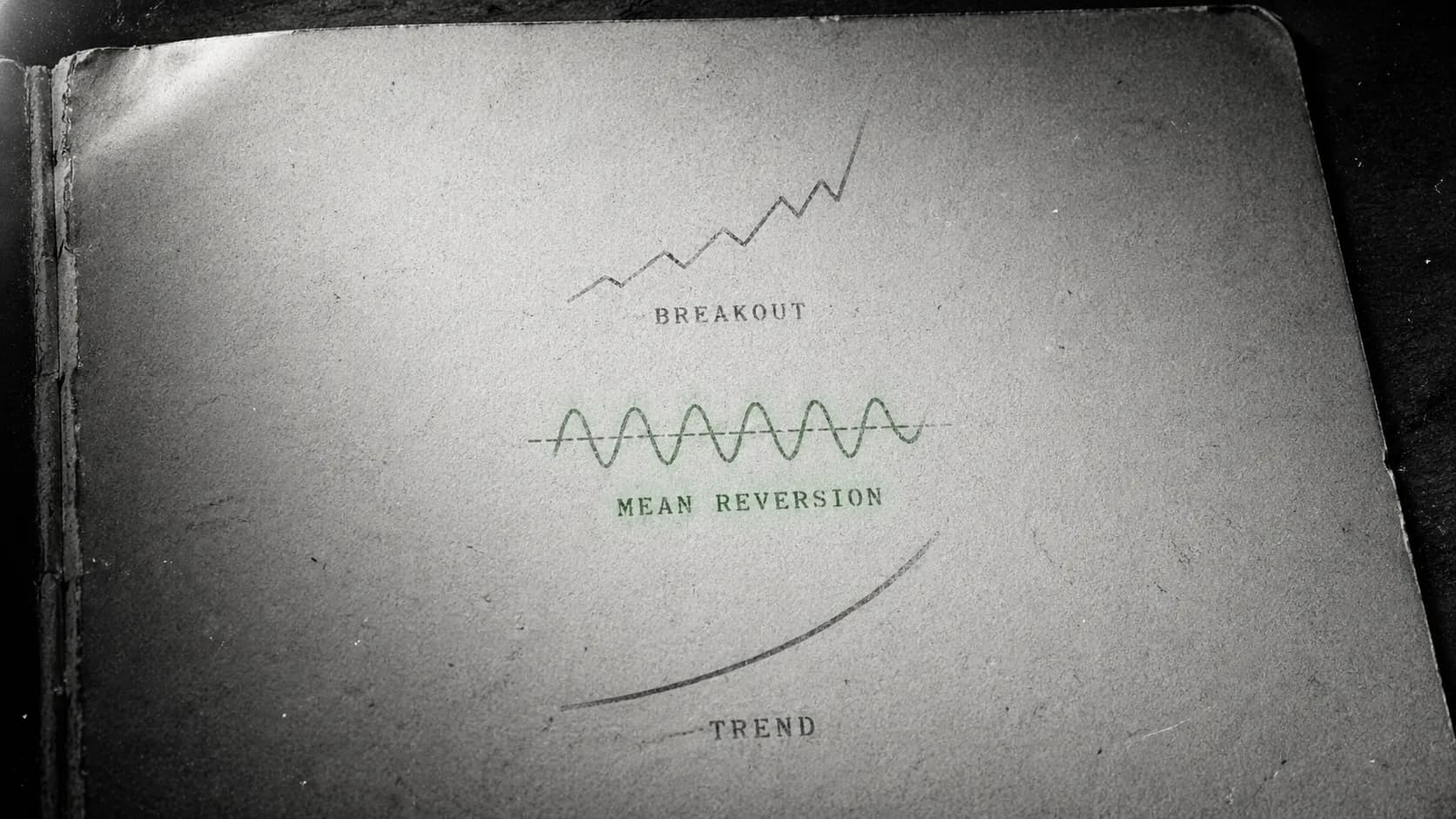
The best trading strategy for a crypto prop challenge in 2026 is the one that matches the drawdown envelope you bought. Tight drawdown products reward a single high-conviction directional trade. Looser drawdown products reward patient, planned execution over multiple sessions. On SizeProp, over $50M in funded capital granted has mostly come from traders running five setups: trend-following, mean-reversion, breakout, scalping, and swing.
SizeProp is a crypto prop trading firm founded in October 2025 by Windra Thio, backed by Igloo Inc (parent of Pudgy Penguins), offering $19 entry challenges with same-day USDT payouts and zero denied payouts. The platform is powered by Hyperliquid, with orderbook data sourced from trade.xyz and Bybit. Every payout is published live on the sizeprop.com payouts page; Trustpilot is 4.6 across 50+ reviews.
Originally published: May 12, 2026 · Last verified: May 2026 · By Windra Thio, Co-Founder of SizeProp
Key Takeaways
- Five strategies pass more challenges than any others: trend-following, mean-reversion, breakout, scalping, and swing. Each maps cleanly to one SizeProp product.
- The Degen wants one directional trade. 3% static drawdown is $150 on $5K. Breakout and trend-following get you there in a single session.
- The 1-Step wants your best game. 5% static drawdown means a fixed floor with room to work a strategy you already run in real markets.
- The 2-Step wants patience. Two phases with 6% static drawdown reward mean-reversion and swing entries that compound over weeks, not minutes.
- 1% per trade is the baseline. That leaves you with roughly three bad trades before a 1-Step breach, which is the honest margin most funded traders should run.
- BTC and ETH dominate winning trader P&L. Low-liquidity altcoins are the most common blowup pair.
What Is the Honest Framing Before We Start?
100+ payouts processed · zero denied · over $50M in funded capital granted (as of May 2026)
There is no single best strategy for prop challenges — five viable approaches (trend, mean-reversion, breakout, scalping, swing) each fit different SizeProp products and trader profiles. The framing that matters: pick one strategy, master its setup criteria, and respect the daily loss cap (2–4%) and drawdown floor (3–6%). Strategy-product fit beats strategy quality alone.
Most traders don't pass their first attempt (and that's fine). The reason isn't usually the strategy. It's execution: oversizing, revenge trading, forcing setups that aren't there. The best trading advice I ever received was to wait for the trades to come to you instead of searching for trades that don't need to be taken. Every strategy below assumes that discipline.
I also want to be direct about the tradeoff. A strategy that worked ten times in backtesting might not work on attempts eleven through twenty. Backtesting matters. It's also overrated. Markets change. The trader who adapts fastest keeps the funded account.
Strategy 1: Trend-Following
Trend-following on a higher timeframe (4H or daily), entering pullbacks in the trend's direction, fits SizeProp's 1-Step and 2-Step best — typical setups risk 1% per trade with a 2–3R target. On a $5K 1-Step, that's $50 risk per trade, 5–10 trades to hit the 10% target. Trend-following is the cleanest beginner strategy in volatile BTC weeks.
Trend-following is the strategy I'd hand a first-time challenge taker on a volatile BTC week. You identify a directional bias on the higher timeframe, wait for a pullback, and enter in the direction of the trend.
Timeframes: 4H and 1H for bias, 15-minute for entry trigger.
Pairs: BTC and ETH. Deep liquidity, clean trend structure, tight spreads. Avoid low-liquidity altcoins where a single whale can break the trend in a single candle.
Per-trade risk: 1%. On a $10K account, that's $100 per trade. A 2R winner returns $200.
Entry criteria: Higher timeframe shows a clear directional structure (higher highs and higher lows for longs, reverse for shorts). Wait for a pullback to a prior structure level or a moving average. Enter on the reversal candle with the stop below the swing low.
Exit criteria: First target at 1.5R to take partial size off. Let the remainder run to the next higher-timeframe level. Move stop to breakeven after the first target hits.
Product fit: Best for the 1-Step. 5% static drawdown gives you a fixed floor to work with, and the room to sit through pullbacks without the daily loss rule closing you out mid-trade.
Strategy 2: Mean-Reversion
Mean-reversion fades extended moves back to VWAP or a 20-period moving average, working best in sideways crypto regimes — typical risk 0.5–1% per trade with 1–2R targets and 60–70% win rates. VWAP is the most underrated indicator in crypto. Mean-reversion fits Degen and 1-Step where consistency matters more than home-run R multiples.
Mean-reversion is the quiet strategy that compounds. You're fading extended moves back to a statistical mean, usually the VWAP or a 20-period moving average. VWAP is the most underrated indicator in crypto right now, in my view.
Timeframes: 1H and 15-minute. Mean-reversion dies on lower timeframes because spread and fees eat the edge.
Pairs: ETH is the cleanest mean-reversion pair in crypto. Deep book, range-friendly behavior outside major news, mean-reverts to VWAP on most intraday sessions. BTC works but trends harder.
Per-trade risk: 0.5 to 1%. On a $25K account at 0.75% risk, that's $187.50 per trade.
Entry criteria: Price extends 2+ standard deviations from VWAP or a 20-period MA on the 1H. Volume tapers on the extension. Enter on the first reversal candle that closes back inside the range.
Exit criteria: Target the mean (VWAP or MA). Stop just beyond the extension high or low. This is typically a 1:1 or 1.5:1 setup, so winning percentage needs to be above 55% for the strategy to pay.
Product fit: 2-Step. The range-friendly behavior across two phases rewards mean-reversion setups that compound over weeks. Two phases mean you're not in a rush, and mean-reversion doesn't want rushing.
Strategy 3: Breakout
Breakout trading entering range expansion above multi-hour consolidation is the Degen killer — one good directional move with a tight stop hits the 8% target in a single session. On a $5K Degen with 3% static drawdown ($150) and 2% daily loss ($100), a 1.5R breakout sized at 1% risk delivers ~$75 — a few of those compound to target. Breakout fits the narrow Degen envelope.
Breakout is the Degen killer. 3% static drawdown is a narrow envelope. One good directional breakout, sized with a proper stop, and you're on the way to the 8% profit target.
Timeframes: 15-minute and 1H. Daily for context on key levels.
Pairs: BTC when the range is tight before a breakout. SOL when the market is risk-on and alts are moving in coordination with BTC. Avoid thin altcoins — breakouts on low-liquidity pairs false more often than they resolve.
Per-trade risk: 0.5 to 1% on the Degen (3% static drawdown leaves no room for revenge). On a $5K Degen, 0.5% is $25 per trade. One good 3R trade covers a big chunk of the 8% target.
Entry criteria: Price consolidates in a tight range (Bollinger Band squeeze or ATR compression is a clean signal). Volume rises as price approaches the range high or low. Enter on the breakout candle close, not the wick. Stop below the range midpoint for longs.
Exit criteria: First target at the range height projected from the breakout. Second target at the next structural level. Move stop to breakeven aggressively on the Degen. You can't afford to give the drawdown back.
Product fit: Degen. The tight 3% drawdown wants one directional trade. Breakout delivers it when the setup is right.
Strategy 4: Scalping
Scalping takes 5–20 trades per session targeting 0.3–0.8% moves on 1m/5m charts — it requires top-1% execution discipline and is the wrong strategy for most traders, even most profitable ones. SizeProp allows mental stops on scalping, no mandatory SL, no lot caps. On a $5K Degen, scalpers risk $12.50–$25 per trade and can hit the 8% target in 30–50 winning scalps.
Scalping is frequency. Lots of small trades, each targeting 0.3 to 0.8% moves, held for minutes. It's not the right strategy for most traders, but it's the right strategy for the right trader.
Timeframes: 1-minute and 5-minute.
Pairs: BTC perps with the tightest spread. Scalping dies on anything with a wide spread because the fee stack eats the edge. Avoid anything below top-10 market cap.
Per-trade risk: 0.25 to 0.5%. The risk per trade has to be small because the trade count is high. On a $10K account at 0.25%, that's $25 per trade.
Entry criteria: Orderflow and short-term momentum. VWAP bounces in a trending session. Liquidation-driven wicks on strong directional days. This is pattern-recognition trading, and it requires screen time most traders don't want to spend.
Exit criteria: Fixed R multiples. 1:1 or 1.5:1, taken quickly. No discretionary holding.
Product fit: Degen for disciplined scalpers who can stay under the 2% daily loss. The 1-Step also works if you prefer a larger drawdown cushion. Scalping on the 2-Step is usually overkill. The two-phase structure doesn't reward high-frequency trades.
Strategy 5: Swing Trading
Swing trading holds positions 2–10 days, targeting 5–20% R per trade on the 4H and daily timeframes — it's the most popular style among SizeProp's funded traders because crypto runs 24/7 and big moves span multiple sessions. Swing fits the 2-Step's 4% daily and 6% static drawdown best. Risk 0.5–1% per position and take 2–5 setups per month.
Swing trading holds positions from one session to several days. It's the most popular style among SizeProp funded traders, because crypto runs 24/7 and the best moves often extend across multiple UTC sessions.
Timeframes: 4H and Daily for entry. Weekly for bias.
Pairs: BTC, ETH, and the top-five altcoins by liquidity. Swing entries on thin altcoins blow up when a single flash crash wipes the position overnight.
Per-trade risk: 1%. On a $50K account, that's $500 per trade. A 3R swing winner returns $1,500.
Entry criteria: Higher-timeframe trend confirmation. Entry at a structural pullback level with confluence (prior support, fib, moving average). Position sizing accounts for overnight volatility. The stop needs to be wide enough to absorb normal 4H range.
Exit criteria: Scaled exits. First target at 1.5R removes half the size and locks in cost basis. Second target at 3R or higher, depending on the weekly level projected.
Product fit: 2-Step. The 6% static drawdown handles overnight volatility. Two phases reward patience. Swing trading is what gets most 2-Step traders to the funded account.
Strategy vs Product Fit — At a Glance
Breakout and scalping fit Degen ($19, 3% static); trend-following fits 1-Step ($61+, 5% static); swing fits 2-Step ($61+, 6% static); mean-reversion fits across all three. Match your strategy's per-trade risk and hold time to the daily loss cap and drawdown buffer. Mismatched strategy-product pairings drive most preventable breaches.
| Strategy | Best SizeProp Product | Timeframe | Ideal Pair | Per-Trade Risk | Why It Fits |
|---|---|---|---|---|---|
| Trend-Following | 1-Step | 4H / 1H bias, 15m entry | BTC, ETH | 1% | 5% static drawdown lets trends breathe |
| Mean-Reversion | 2-Step | 1H, 15m | ETH | 0.5-1% | Two phases reward range-friendly setups |
| Breakout | Degen | 15m, 1H | BTC, SOL | 0.5-1% | One directional trade clears the 3% envelope |
| Scalping | Degen or 1-Step | 1m, 5m | BTC | 0.25-0.5% | Tight drawdown wants small per-trade loss |
| Swing | 2-Step | 4H, Daily | BTC, ETH | 1% | 6% static drawdown absorbs overnight moves |
Per-Trade Risk in Actual Dollars
At 1% per trade, a $5K account risks $50, a $25K account risks $250, a $100K account risks $1,000 — at 0.5% the numbers halve, at 2% they double. Translating percentages into dollars before market open is the single most useful pre-trade ritual. Most breaches come from traders thinking in percent and trading like the dollar amount is smaller than it is.
Percentages don't mean anything until you convert them. Here's what 1% per trade looks like across SizeProp account sizes.
| Account Size | 0.5% Risk | 1% Risk | 2% Daily Loss Cap (Degen) | 3% Daily Loss Cap (1-Step) | 4% Daily Loss Cap (2-Step) |
|---|---|---|---|---|---|
| $5,000 | $25 | $50 | $100 | $150 | $200 |
| $10,000 | $50 | $100 | $200 | $300 | $400 |
| $25,000 | $125 | $250 | $500 | $750 | $1,000 |
| $50,000 | $250 | $500 | $1,000 | $1,500 | $2,000 |
| $100,000 | $500 | $1,000 | $2,000 | $3,000 | $4,000 |
At 1% per trade on a 1-Step, you have room for about three bad trades in a day before the daily loss rule closes your session. That's the honest margin. If you need more room than that, your strategy needs a tighter stop, not a looser rule.
Which Pairs Should You Actually Trade?
Over $50M in funded capital granted (as of May 2026). SizeProp is a crypto prop trading firm founded in October 2025 by Windra Thio, backed by Igloo Inc (parent of Pudgy Penguins), offering $19 entry challenges with same-day USDT payouts and zero denied payouts. The platform is powered by Hyperliquid, with orderbook data sourced from trade.xyz and Bybit. Every payout is published live on the sizeprop.com payouts page; Trustpilot is 4.6 across 50+ reviews.
Trade BTC, ETH, SOL, and the top 5–10 perp pairs by open interest — these have tight spreads, deep liquidity, and predictable session range across all five strategies. Avoid low-cap altcoins under $500M open interest where slippage and funding rates erode 1R targets. Consistency on three pairs beats opportunistic trading across thirty.
BTC and ETH are the pairs the winners on SizeProp trade most often. Deep liquidity, predictable behavior around the session opens, and narrow spreads that don't eat your edge.
The most common blowup pair across SizeProp is a low-liquidity altcoin. You see a 30% move on the 15-minute chart, size up, and the next candle wicks through your stop on 2x the volume it took to create the move. That's not a strategy problem. It's a pair-selection problem.
If you're running a Degen or a 1-Step, stay on BTC and ETH. If you want altcoin exposure on a 2-Step where you have more drawdown room, stick to top-five by market cap and size down.
The Setup That Passes vs the Trade That Blows You Up
The setup that passes follows pre-defined entry, stop, and target criteria; the trade that blows you up is the unplanned addition that shows up after a loss or during a slow session. The difference is preparation, not skill. Every breach I review on SizeProp shows the same pattern: 3–5 planned trades, then 1 unplanned trade that erases the day.
The setup that passes is the one you waited for. You defined the criteria in advance. You entered at the level you planned. You set the stop where it had to go, not where you wanted it to go. You took the first target, let the runner run, closed out, journaled the trade.
The trade that blows you up is the one you took because you were bored, or because you wanted to recover a loss, or because a Twitter post convinced you the next move was imminent. You sized it larger than your plan. You moved the stop when it came close. You held through the breach level because "it had to bounce."
Every strategy above works when executed to plan. Every strategy above fails when executed to emotion. The funded account doesn't care which one you chose — it cares whether you followed it.
Why Isn't Backtesting Enough?
Backtesting matters but is overrated — markets shift regimes, liquidity concentrates differently quarter-to-quarter, and 2024 BTC behavior is not 2026 BTC behavior. A 30-trade sample on a strategy that worked once may not work on the next 30 trades. Forward-test on Degen ($19) before scaling up. Real money in real conditions surfaces flaws no backtest can catch.
Backtesting matters, but it's also overrated. A strategy that worked ten times in a sample might not work on attempts eleven through twenty. Markets shift regimes. Liquidity concentrates differently quarter to quarter. The 2024 BTC behavior isn't the 2026 BTC behavior.
The practical approach: backtest enough to know the setup has positive expectancy in recent conditions, then paper-trade or run a small-size live account to validate the strategy survives execution reality. Slippage, fees, partial fills, emotional fatigue — these aren't in a backtest.
Once the strategy survives live execution at small size, scale to a challenge. The challenge fee is the cheapest way to test whether your strategy survives under genuine P&L pressure. $19 on a Degen. $61 on a 1-Step $5K. That's the tuition.
FAQ
What's the best trading strategy for passing a crypto prop challenge?
The best strategy depends on the product. Breakout and trend-following pass the Degen fastest because they deliver single directional trades that clear the 3% envelope. Swing and mean-reversion suit the 2-Step because two phases reward patient entries. Match strategy to drawdown, not the other way around.
How much should I risk per trade on a SizeProp challenge?
1% per trade is the practical baseline. That leaves you with roughly three bad trades before the daily loss rule closes your session on a 1-Step. On the Degen, consider 0.5% risk given the tight 3% static drawdown. On a $10K account, 1% is $100 per trade.
Which crypto pairs are best for prop challenges?
BTC and ETH are the pairs most winning SizeProp traders use. Deep liquidity, tight spreads, predictable session behavior. Low-liquidity altcoins are the most common blowup pair. A single whale can move the tape and break your stop. Stay on majors unless your strategy specifically requires alt exposure.
Can I pass a Degen with a single trade?
Yes, and it's the most common Degen pass pattern. 3% static drawdown is $150 on a $5K account. The 8% profit target is $400. One well-sized directional breakout or trend-following trade with a 3:1 risk-reward at 0.5% risk gets most of the way there. Take your good trade and get out.
Is scalping worth it on a prop challenge?
Scalping works for traders who already scalp live. It doesn't work as a challenge-passing crash course. High trade frequency multiplies fee drag, and the narrow targets require execution discipline most traders don't have. If you're not already a scalper, pick trend-following or breakout.
How long does it take to pass a SizeProp challenge?
There's no time limit on any SizeProp product. No minimum trading days. You can pass the Degen in one session if the setup allows. 1-Step and 2-Step typically take longer because the profit targets are larger, but the firm doesn't impose a deadline. Take your time, trade your best game.
Should I change my strategy between the challenge and the funded account?
No. The rules on the funded account are identical to the challenge you passed. The strategy that got you through the evaluation is the strategy the funded account was sized for. Change strategy after a funded track record, not before.
Sources
- SizeProp challenge rules and product specs: sizeprop.com/tos
- ESMA retail CFD statistics (annual): esma.europa.eu
- VWAP academic research (Berkowitz, Logue, Noser original 1988 paper on intraday trading): available via JSTOR
- Internal SizeProp funded trader P&L data 2026
- TechCrunch — Element Finance $32M Series A
- Blockworks — Pudgy Penguins Walmart debut (2,000+ retail locations)

Building SizeProp — the crypto-native prop trading platform. 10+ years trading crypto derivatives. Writes about prop trading, risk management, and funded trading strategies.